
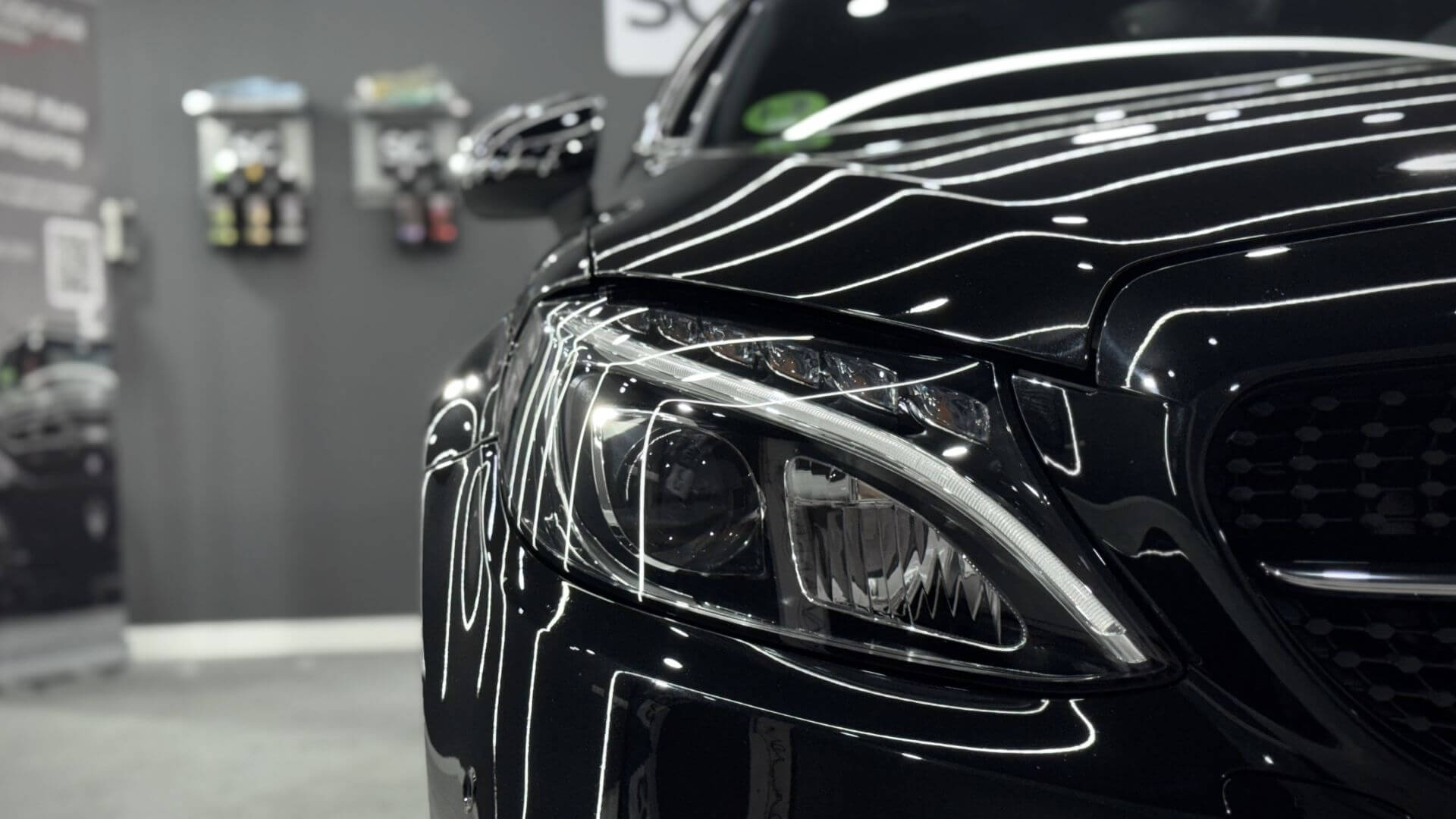
When it comes to protecting a sports or high-end car, one of the most frequently asked questions is clear: which protects better, PPF vs ceramic coating?
Both systems offer important advantages, but they serve different functions. Understanding your differences not only helps you make a better decision, but also avoids misguided expectations.
In this professional guide we analyze ppf vs ceramic coating with real examples, technical comparison and recommendations according to type of vehicle and use.
To understand what protects best, we must first understand what each system is.
PPF (Paint Protection Film) It is a physical polyurethane film that is installed over the vehicle’s paint. It acts as a barrier against impacts, scratches and abrasion.
Ceramic coating, on the other hand, is a liquid coating that chemically adheres to the paint, creating an extremely hard and repellent protective layer.
The key difference is this:
They don’t compete in exactly the same category.
If we analyze ppf vs ceramic coating against real impacts, PPF is clearly superior.
Imagine a sports car driving on the highway. A small stone impacts the front bumper.
PPF has thickness and elasticity. Coating does not.
That’s why, when it comes to protection against gravel, rubbing or small bumps, PPF is the most robust option.
Now let’s change the scenario.
The car remains parked in the sun and receives bird droppings or tree resin.
In the analysis of ppf vs ceramic coating, the coating stands out for its ability to repel water, dirt and contaminants.
This reduces the frequency of washing and makes maintenance easier.
A key point in the comparison ppf vs ceramic coating is the behavior against micro-scratches.
The ceramic coating provides surface hardness, which reduces micro-scratches from washing.
However, the PPF goes further:
In high-wear areas (handles, wheel arches, front areas), PPF offers greater peace of mind.
It depends on the product and maintenance.
In this category, PPF typically offers greater structural longevity.
In the comparison ppf vs ceramic coating, the visual result also matters.
Coating usually intensifies brightness and depth of color.
The PPF, for its part:
In cars with matt paint, the specific PPF is especially recommended.
Yes, and in fact it is the most complete solution.
Many high-end vehicles opt for:
This combination maximizes physical protection and ease of maintenance.
When we professionally analyze ppf vs ceramic coating, the answer is not always to choose one or the other, but to understand how they work together.
If we talk strictly about protection against physical damage:
PPF protects more.
If we talk about maintenance, shine and repellency:
The ceramic coating stands out.
The right choice depends on the use of the vehicle:
In Studio Car We analyse each vehicle in a personalised way. We do not believe in generic solutions, but in protection strategies adapted to the real use of the car.
We work with premium PPF and high-end ceramic coatings, applied in controlled environments and under professional processes that guarantee long-lasting results.
If you want to know which option is best for your car or see real projects where we apply combined solutions,
Follow us on Instagram and LinkedIn, where we share real cases, processes and results of premium protection in Barcelona.
When it comes to protecting a sports or high-end car, one of the most frequently asked questions is clear: which protects better, PPF vs ceramic coating?
Both systems offer important advantages, but they serve different functions. Understanding your differences not only helps you make a better decision, but also avoids misguided expectations.
In this professional guide we analyze ppf vs ceramic coating with real examples, technical comparison and recommendations according to type of vehicle and use.
To understand what protects best, we must first understand what each system is.
PPF (Paint Protection Film) It is a physical polyurethane film that is installed over the vehicle’s paint. It acts as a barrier against impacts, scratches and abrasion.
Ceramic coating, on the other hand, is a liquid coating that chemically adheres to the paint, creating an extremely hard and repellent protective layer.
The key difference is this:
They don’t compete in exactly the same category.
If we analyze ppf vs ceramic coating against real impacts, PPF is clearly superior.
Imagine a sports car driving on the highway. A small stone impacts the front bumper.
PPF has thickness and elasticity. Coating does not.
That’s why, when it comes to protection against gravel, rubbing or small bumps, PPF is the most robust option.
Now let’s change the scenario.
The car remains parked in the sun and receives bird droppings or tree resin.
In the analysis of ppf vs ceramic coating, the coating stands out for its ability to repel water, dirt and contaminants.
This reduces the frequency of washing and makes maintenance easier.
Para brindar las mejores experiencias, utilizamos tecnologías como cookies para almacenar y/o acceder a información del dispositivo. Si acepta el uso de estas tecnologías, podremos procesar datos como el comportamiento de navegación o los identificadores únicos en este sitio. Si no acepta o retira el consentimiento, es posible que se vean afectadas ciertas características y funciones.