
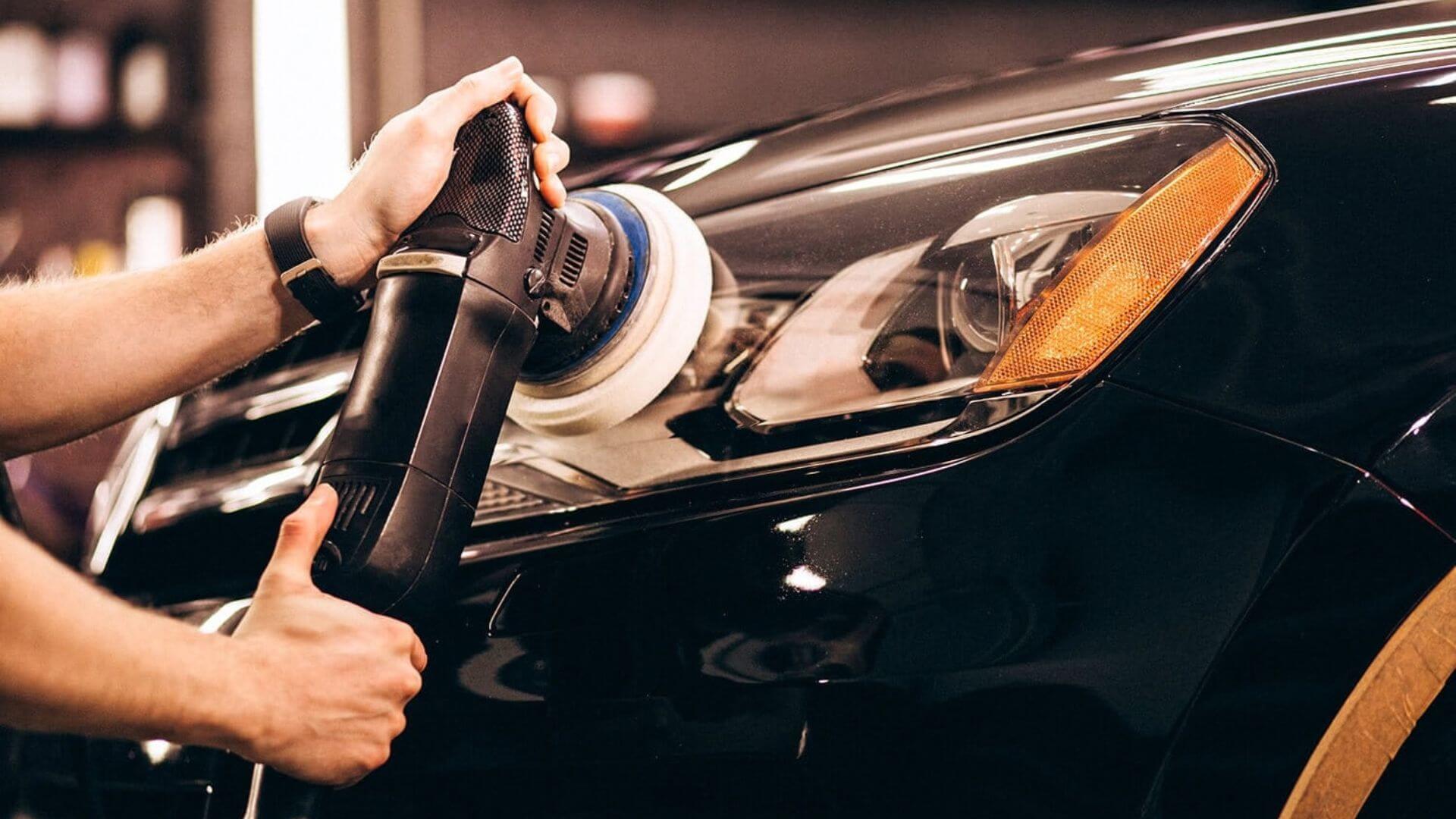
Car polishing improves the appearance of paint, reduces surface micro-scratches, and restores a more uniform reflection through professional correction techniques.
A sports car paint can lose some of its visual depth over time. Improper washing, dust, environmental residues, and contact with cleaning tools can leave small marks that scatter light and make the surface appear less shiny.
Although these defects are usually more visible under direct light, their effect on the vehicle’s overall aesthetics can be considerable. In dark bodies, metallic colors, and high-end finishes, even the smallest imperfections can alter color perception.
Professional car polishing allows many of these defects to be addressed through a controlled process aimed at improving surface uniformity and restoring visual clarity. The key is not to polish more, but to identify what the paint needs and apply the appropriate technique.
Car polishing is a paint correction procedure that uses specific abrasive products and specialized tools to reduce certain imperfections in the transparent finish layer, known as varnish.
During the process, the professional works on the surface with the aim of smoothing defects compatible with this treatment and ensuring that light reflects more evenly. This can improve the depth of color and the overall appearance of the bodywork.
Not all defects can be removed by polishing. Deep scratches, damage to the varnish, and paint problems require a different evaluation. Therefore, before intervening, it is essential to inspect the condition of the finish and determine how reasonable it is to make a correction.
A good result depends on finding the balance between aesthetic improvement and preservation of the original material.
Micro-scratches are small surface marks that can appear with daily vehicle use. Sometimes, they occur when dirt is removed without proper lubrication during washing, using contaminated accessories, or drying the bodywork with inappropriate materials.
These marks can form circular patterns, commonly known as swirls, which are especially noticeable when light hits the paint from certain angles.
Car polishing can help reduce its visibility when defects are within the correctable finish layer. To do this, it is necessary to evaluate the paint, select the appropriate level of abrasiveness, and check the progress of the work.
The intervention must be precise. An overly aggressive correction can remove more varnish than necessary, while insufficient treatment may not produce the expected improvement. For this reason, there is no universal combination of products and techniques valid for all cars.
Not all paints need the same treatment. Some have slight marks that can improve with gentle correction; others require more specific work to treat more prevalent surface defects.
The procedure adapts to the initial diagnosis and may include the following stages:
This methodology allows car polishing to be adapted to the characteristics of each vehicle. The goal is not to pursue visual perfection at any cost, but to achieve a proportionate and technically appropriate improvement.
The so-called mirror effect is characterized by a surface that reflects light very clearly and has a uniform appearance. To achieve this, it is not enough to apply a product that adds shine: the finish must be properly prepared and surface defects must have been properly treated.
Lighting, body color, and the previous condition of the paint influence the result. Therefore, the same technique can offer different results depending on the vehicle.
Professional car polishing aims to improve the sharpness of reflections and the visual depth of color, always respecting the limitations of the original finish. In high-end vehicles, this care is especially relevant because it allows the bodywork design to be enhanced without resorting to unnecessary aesthetic modifications.
There is no fixed frequency for polishing a car. The need depends on its use, the maintenance received, and the condition of the paint. Since the process involves abrasive correction, it is not advisable to repeat it routinely if the surface is already in good condition.
It may be advisable to request an evaluation when the bodywork shows visible micro-scratches, poorly defined reflections, or marks that persist after proper cleaning. It can also be assessed before applying a protective treatment, as long as the condition of the paint justifies it.
After treatment, proper washing habits help preserve improvement for longer. Prevention is essential to reduce the appearance of new marks and avoid unnecessary corrections.
Restoring the appearance of a painting requires more than just a polishing machine and compound. It requires experience to interpret the surface condition, select the right treatment, and work precisely on each panel.
At Studio Car, in Barcelona, the care of premium vehicles starts with attention to their finishes and an individual assessment of their needs. A well-designed polish can enhance the depth of color and the clarity of reflections, while keeping the preservation of the original paint as a priority.
If you want to learn more about paint correction, detailing, and automotive protection, we invite you to explore the articles on our blog and follow Studio Car on Instagram and LinkedIn to discover recommendations and specialized work on high-end vehicles.
Para brindar las mejores experiencias, utilizamos tecnologías como cookies para almacenar y/o acceder a información del dispositivo. Si acepta el uso de estas tecnologías, podremos procesar datos como el comportamiento de navegación o los identificadores únicos en este sitio. Si no acepta o retira el consentimiento, es posible que se vean afectadas ciertas características y funciones.