

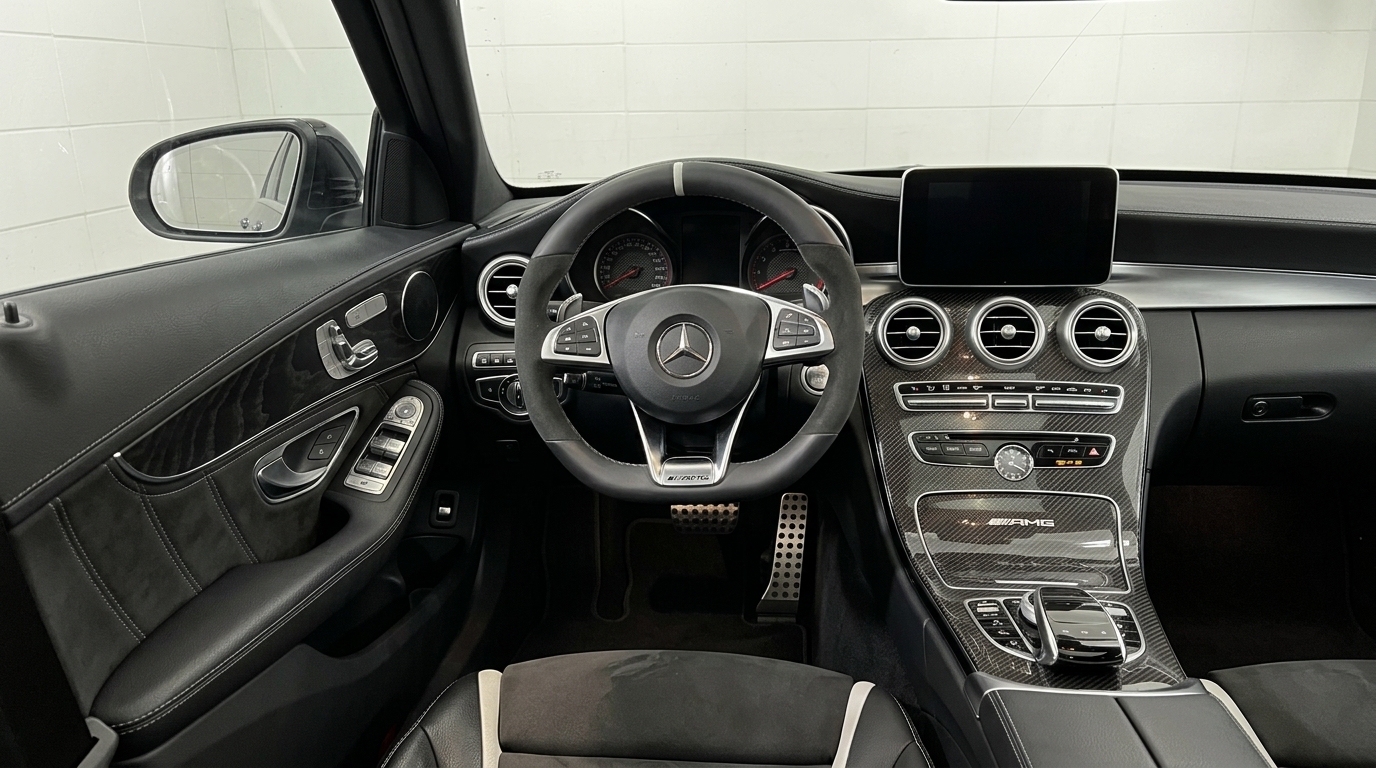
The steering wheel is one of the parts of the vehicle with which there is the most frequent contact. Every journey, every manoeuvre and every journey involves direct contact with its surface. Therefore, even in a car whose interior is kept in good condition, the steering wheel may show signs of use before other elements of the cabin.
Daily exposure to natural hand grease, constant rubbing, rings, solar radiation and certain disinfectant products can progressively alter the skin. Over time, the matte finish loses uniformity, greasy shine appears and small scratches, scratches or micro-cracks may become visible. The result not only affects the appearance of the piece, it also changes the feeling when holding it and conveys an impression of wear throughout the interior.
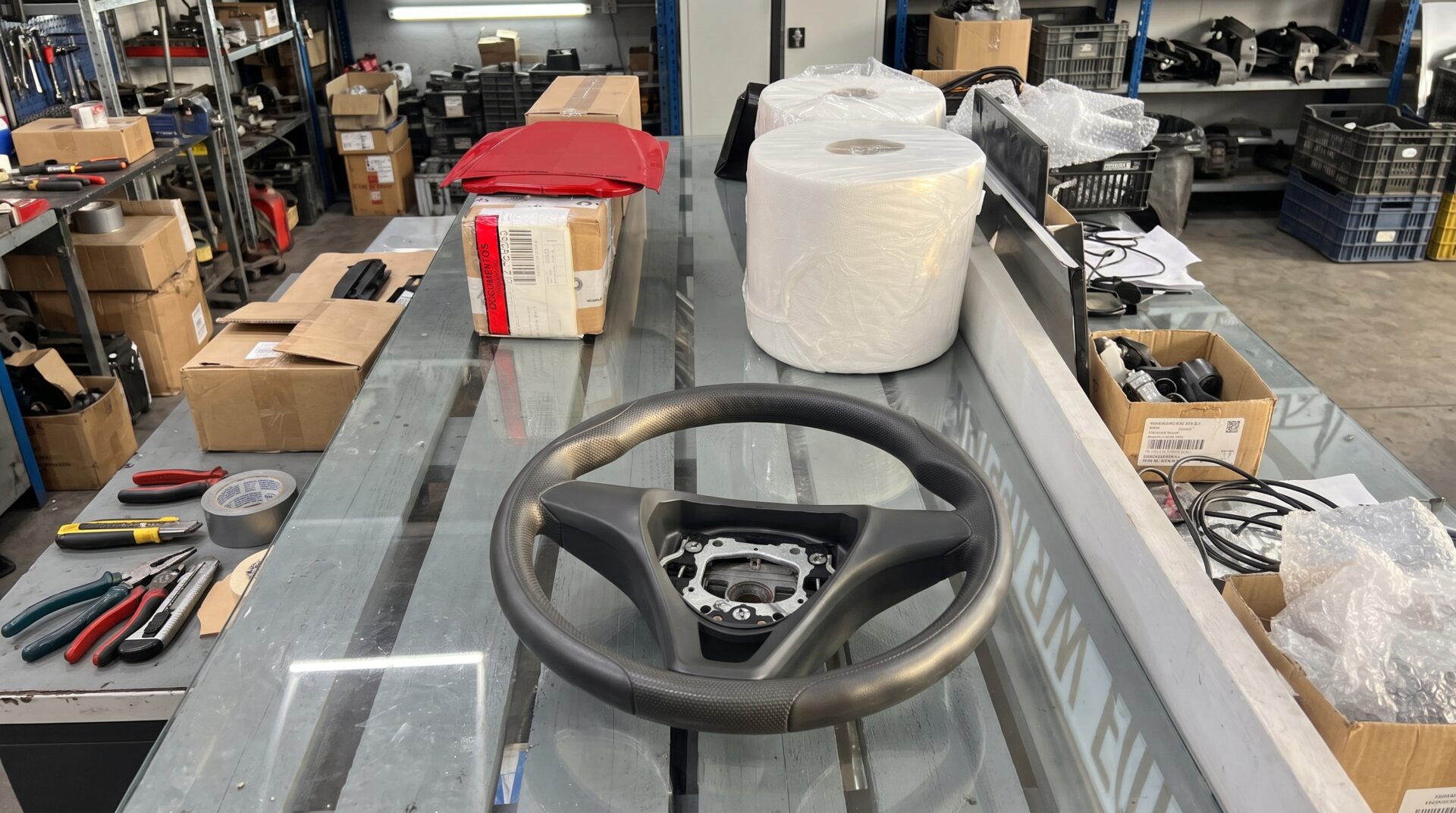
In these cases, the restoration of the leather steering wheel allows it to recover its original look and feel without having to replace the material. Instead of resorting directly to a complete reupholstery, work is done on the existing surface to correct imperfections and renew its protection.
Unlike other surfaces in the cabin, the steering wheel is subject to continuous use and direct contact. Repeated friction can polish the surface layer and cause that shine that appears in the areas of greatest contact. Added to this are body fat and residues that accumulate in the pores of the skin, as well as exposure to the sun and the use of cleaning products that are not always suitable for this material.
When the finish begins to deteriorate, different signs may appear:
These signs do not necessarily mean that the entire upholstery of the steering wheel needs to be replaced. If the material allows it to be recovered, a specialized intervention can renew the surface and preserve the original part.
To achieve an even, long-lasting finish, restoration requires more than applying a color product. Each stage prepares the surface for the next and helps the result maintain both its appearance and the skin’s suppleness.
The first step is to remove the encrusted dirt, the grease accumulated by the contact of the hands and the remains of previous treatments. The cleansing is carried out in depth to free the pores of the skin and leave a suitable base to work with.
This preparation is essential: if residues remain on the surface, they can affect the adhesion of the products applied later. Therefore, before repairing or renewing the colour, it is necessary to work on a properly cleaned and degreased part.
Once the part is cleaned, worn areas and visible marks are checked. Scratches and small irregularities are corrected with a specific elastic putty for leather.
The aim is to recover a smooth and continuous surface, preventing imperfections from being visible under the new finish. The elasticity of the product allows the repair to accompany the behaviour of the material, which is especially important in a part that is in constant contact with the hands.
With the imperfections corrected, the surface is prepared to receive the dye. The primer helps to promote adhesion and achieve an even application, without compromising the flexibility of the skin.
This phase is important so that the subsequent layers are properly integrated and the finish retains a natural appearance. Good preparation allows the final work to have greater uniformity and visual quality.
The specific dye is adjusted to the original shade of the steering wheel and is applied through thin and uniform layers. Working progressively allows you to control the coverage and maintain a homogeneous result, respecting the appearance of the piece.
Precision in color is especially important in a restoration: the purpose is not to change the personality of the interior, but to restore coherence and freshness. The application must recover the tone without generating visible differences or altering the original character of the steering wheel.
The last stage consists of applying a highly durable matte protective varnish. This sealing helps to protect the surface against continuous rubbing, sweat and UV radiation, as well as recovering the matte appearance characteristic of the original finish.
Thus, the work is not limited to renewing the color, but incorporates a new layer of protection for everyday use.
After completing the process, the balance wheel regains a more uniform appearance, a smooth texture and the matte feel that it had lost with use. Marks and worn areas are corrected, the tone is reintegrated with the rest of the interior and the piece regains a careful presence.
One of the main values of this intervention is that it allows the original material to be preserved. It is not necessary to undertake a complete reupholstery when the condition of the skin admits a restoration. This avoids a more laborious replacement and allows to act directly on the areas that need attention, maintaining the essence of the cabin.
In addition, renewing the protective finish helps to make the surface better prepared to face daily contact. As with any skin element, aftercare also matters: proper cleaning and the use of compatible products help to preserve the result and prevent premature wear.
At StudioCar, we understand that the state of detail influences the overall perception of a vehicle. The steering wheel is at the heart of the driving experience and its conservation deserves a precise, material-friendly intervention aimed at recovering its original finish.
Leather flywheel restoration is an effective alternative when use has left shine, scratch or small imperfections, but the piece can still be preserved. Through careful preparation, surface repair, color adjustment and protective sealing, it is possible to restore a renewed appearance without resorting directly to reupholstery.
If you want to know more vehicle care, restoration and protection work, we invite you to follow StudioCar on Instagram and LinkedIn. There we share projects and solutions designed to keep each vehicle in the best condition.
Para brindar las mejores experiencias, utilizamos tecnologías como cookies para almacenar y/o acceder a información del dispositivo. Si acepta el uso de estas tecnologías, podremos procesar datos como el comportamiento de navegación o los identificadores únicos en este sitio. Si no acepta o retira el consentimiento, es posible que se vean afectadas ciertas características y funciones.