
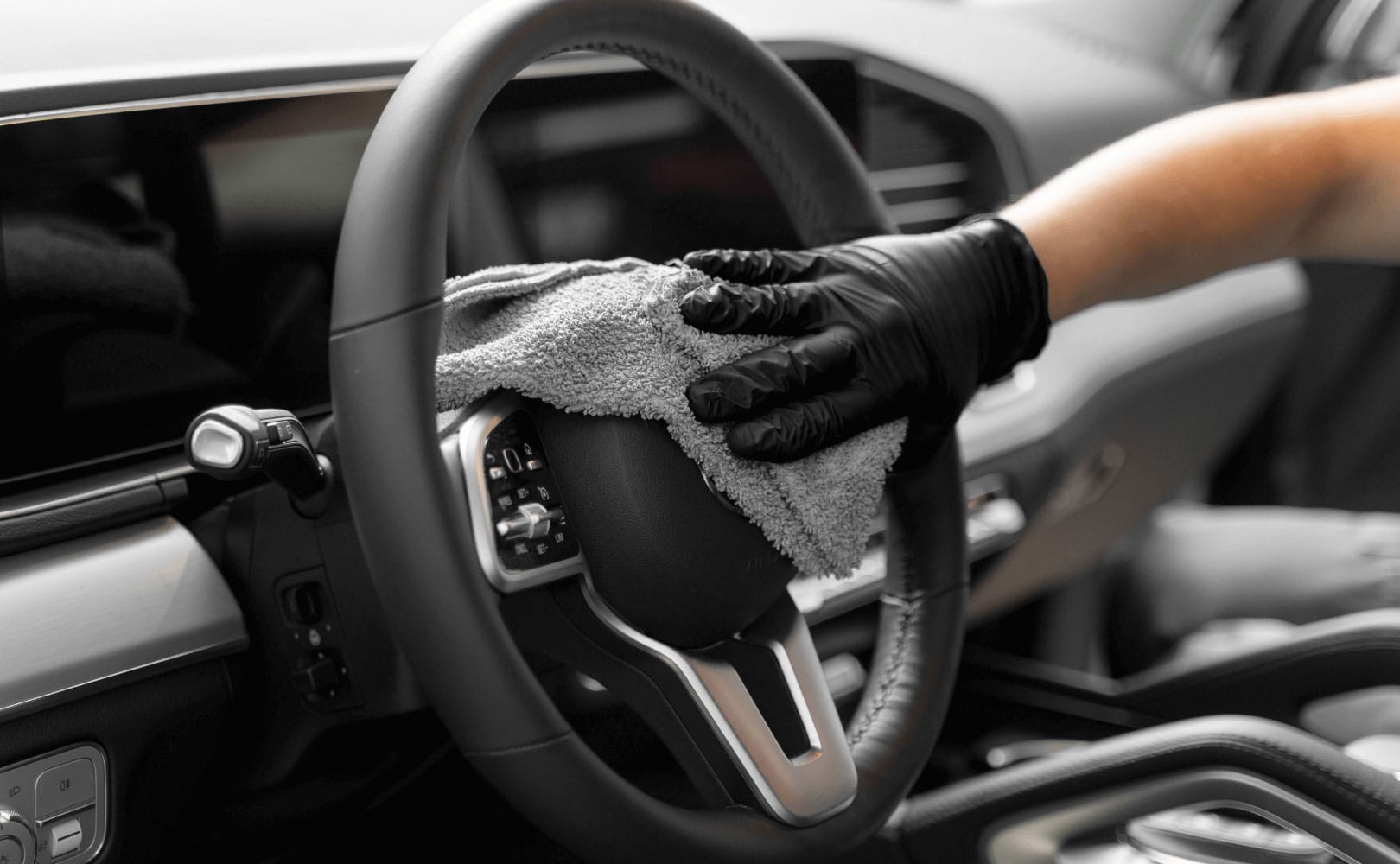
A car can be clean to the naked eye and still accumulate contaminants in the paintwork, residue in difficult areas and wear and tear on its interior surfaces. The difference between a conventional wash and specialized car care is in how each material is treated, what techniques are applied and how far the process goes.
This is where understanding what detailing is becomes important. More than a thorough cleaning, it is a set of procedures aimed at recovering, preserving and enhancing the aesthetic condition of the vehicle . In sports and high-end cars, where finishes and materials require special attention, this work demands technical knowledge, appropriate tools and meticulous execution.
Automotive detailing is a process of cleaning, decontaminating, conditioning and, when necessary, correcting surfaces. Its objective is to treat the vehicle thoroughly, paying attention to both visible areas and those that usually go unnoticed during a regular wash.
While a conventional wash seeks to remove surface dirt, detailing starts from the evaluation of the condition of the car to determine what treatments it needs. Not all vehicles require the same procedures: the type of paint, the materials of the interior, the usual use and the conditions of conservation have an influence.
For this reason, the process can include anything from deep cleaning to polishing the paint or applying protective treatments. The key is to select the appropriate techniques, without subjecting the surfaces to unnecessary interventions.
Understanding what professional detailing is means recognizing that a good result does not depend solely on the time spent on the vehicle. The choice of products, the control of the process and the knowledge of how each surface responds also intervene.
Paint, for example, may have adhered contamination, surface marks or loss of gloss. To treat it correctly, it is necessary to identify the problem before choosing a technique. Applying a polish without first evaluating the finish can be counterproductive, as abrasive correction must be carried out judiciously and in a controlled manner.
A professional service takes into account several factors:
This combination of analysis and execution is what makes detailing a technical job, not just a longer cleanup.
The outdoors is often one of the main reasons to request a detailing treatment. Exposure to the sun, rain, dust, road debris and improper washes can progressively affect your appearance.
The process begins with careful cleaning and can continue with specific decontamination to remove adhering particles. If the paint has correctable defects, the possibility of polishing is considered to improve its uniformity and restore visual depth.
However, polishing is not always necessary. In delicate finishes or paints with special characteristics, the intervention must be adapted to their particularities. The purpose is not to intervene for the sake of intervening, but to achieve an improvement consistent with the real condition of the vehicle.
Then, the application of a protective treatment, such as a ceramic coating, can be considered if it fits the needs of the car. This type of solution complements maintenance, but does not replace proper cleaning or eliminate the need to take care of the surface.
When explaining what interior detailing is, it is important to understand that the cabin requires specialized treatment. Leather, fabrics, plastics, trim and multimedia surfaces have different needs, so they should not be cleaned with a universal method.
Interior detailing can include thorough vacuuming, cleaning hard-to-reach areas, upholstery treatment and conditioning compatible materials. In leather interiors, for example, it is important to use suitable products to remove dirt without unnecessarily altering the finish.
The attention to detail can be seen in elements such as the seams of the seats, the joints between parts, the air vents and the spaces around the controls. They are small areas, but their care helps to preserve a uniform and pleasant appearance of the interior.
There is no universal frequency, because maintenance depends on the use, the environment and the condition of the vehicle. However, it is advisable to consider a professional service when signs such as these appear:
A prior evaluation allows us to determine what treatment is really necessary and avoid interventions that do not add value.
Understanding what detailing is allows you to appreciate why experience, products and precision of execution matter as much as the visual result. In a high-end vehicle, each finish deserves to be treated according to its characteristics and condition.
At Studio Car, in Barcelona, automotive care is approached from a specialized perspective, with attention to detail that helps preserve the aesthetics of the vehicle. The choice of treatment must respond to the specific needs of each car, both outside and inside.
If you want to learn more about premium vehicle care and protection, we invite you to explore the blog articles and follow Studio Car on Instagram and LinkedIn to stay up to date on our services, techniques, and recommendations.
Para brindar las mejores experiencias, utilizamos tecnologías como cookies para almacenar y/o acceder a información del dispositivo. Si acepta el uso de estas tecnologías, podremos procesar datos como el comportamiento de navegación o los identificadores únicos en este sitio. Si no acepta o retira el consentimiento, es posible que se vean afectadas ciertas características y funciones.