
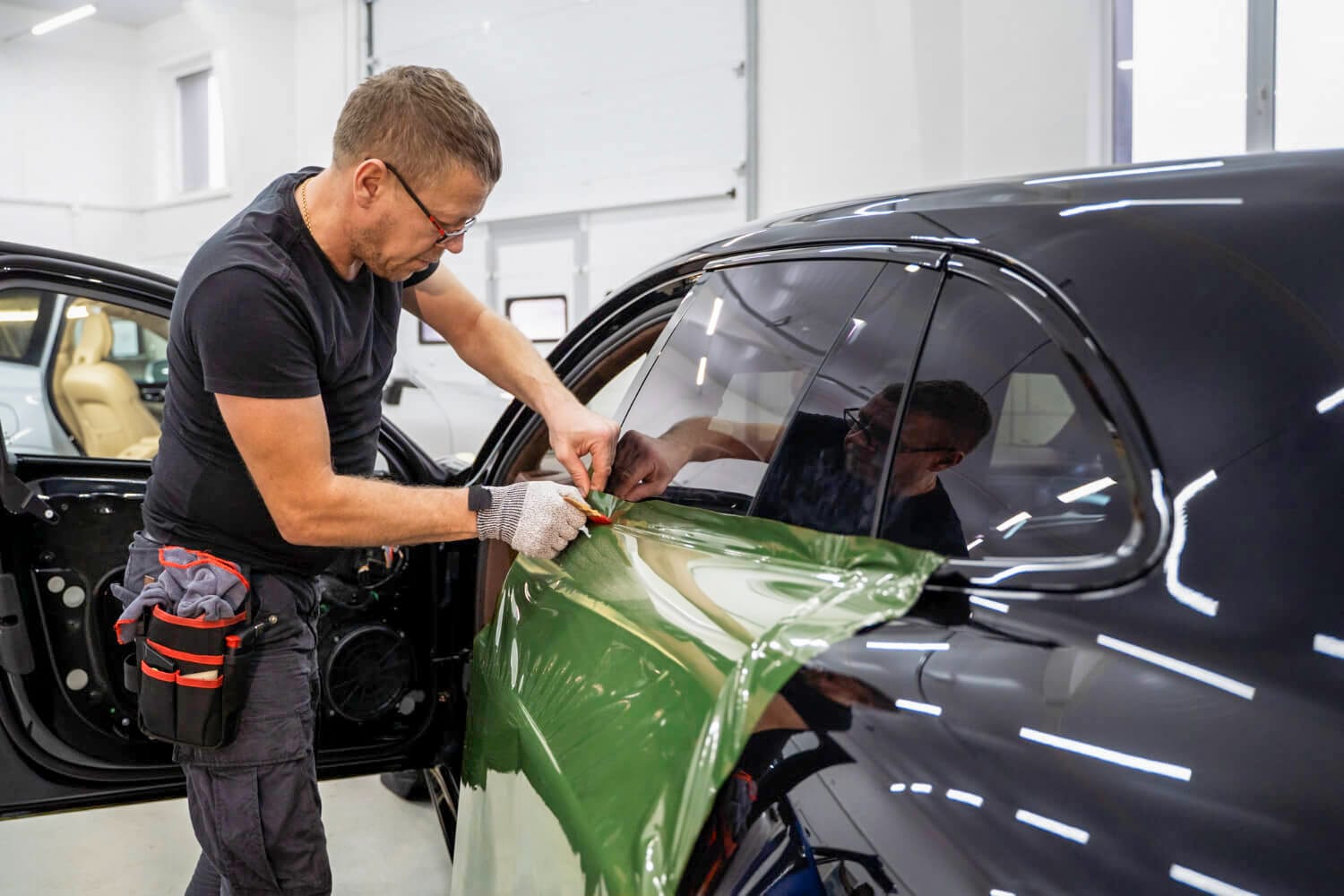
Changing the appearance of a car does not always mean modifying its original paint. Today there are solutions that allow you to transform its aesthetics, explore new colors and achieve personalized finishes without resorting to conventional repainting. One of the most popular in the world of premium and sports vehicles is the car wrapping.
But what is wrapping and why has it become such an interesting option for those looking to personalise their vehicle? This technique consists of applying a vinyl film to certain surfaces of the body to modify its appearance. Depending on the material chosen, it is possible to achieve anything from a comprehensive colour change to satin, matte, glossy finishes or with special visual effects.
The result depends on the quality of the vinyl, the surface preparation and the precision of the installation. Therefore, before choosing a finish, it is advisable to know how the process works and what possibilities it offers.
Understanding what wrapping is also helps to distinguish this technique from other customization solutions. Its main characteristic is that it allows the exterior appearance to be modified by means of a vinyl film, preserving the original paint underneath when it is in suitable conditions.
Wrapping Automotive coating consists of coating the body with an adhesive film designed to adapt to its shapes and contours. Unlike paint, the aesthetic change is achieved by a vinyl applied over the existing finish.
This technique allows the color of the vehicle to be modified and its appearance to be customized without having to repaint the entire bodywork. In addition, when suitable materials are used and the installation and removal conditions are respected, the vinyl can be removed without the need to preserve that aesthetic change permanently.
However, the result also depends on the condition of the original paint. A deteriorated surface, with lifted varnish or poor repairs can make it difficult to apply and remove the material.
Wrapping is not, therefore, simply gluing a sheet on the car. It is a technical job that requires knowing the behavior of the vinyl, the particularities of each surface and the appropriate procedures to achieve a uniform finish.
One of the great advantages of wrapping is the variety of aesthetic options it offers. It allows the appearance of the vehicle to be adapted to the owner’s tastes without being limited to the factory colors.
Among the most common finishes we find:
The choice should not be based solely on a colour sample. It is also important to assess how the finish will look on the different surfaces of the vehicle, how it will interact with the black or chrome elements and what maintenance it will need.
In a sports car, for example, one shade may emphasize design lines, while another may make volumes feel differently. The goal is to find a match that makes sense with the vehicle’s personality.
Knowing what wrapping is also means understanding that each finish offers a different visual experience. Therefore, before choosing a vinyl, it is advisable to assess the design of the vehicle, the desired result and the characteristics of the material.
Wrapping and repainting allow you to change the appearance of a car, but they are different procedures and respond to different needs.
Painting modifies the finish by applying new products to the prepared surface. Wrapping, on the other hand, uses a vinyl film that is placed on top of the existing paint.
Vinyl is especially interesting for those who want to explore a new aesthetic without making a permanent color change. It also allows you to propose custom designs and finishes that may not be available in the original manufacturer’s configuration.
However, it is not a substitute for a paint repair when the body is severely damaged. Nor should it be assumed that any vinyl can be removed without consequence in all circumstances: the condition of the original finish, the age of the material and the installation conditions all influence the process.
The right decision will depend on the result you want to achieve, the condition of the vehicle and the intended use.
Although the main purpose of wrapping is aesthetic, vinyl can provide some surface protection against light rubbing and some of the everyday wear and tear. However, its level of protection should not be confused with that of a PPF film ( Paint Protection Film), specifically designed to protect paint against impacts and certain external aggressions.
If the priority is to change the color and customize the car, wrapping may be a suitable solution. If you are mainly looking to protect the paint against small stones, impacts and surface scratches, it is advisable to consider a PPF.
It is also possible to study different solutions for different areas of the vehicle, always taking into account the compatibility of the materials and the desired finish.
Understanding this difference allows you to choose the treatment for its actual function and not just for its appearance.
A premium vinyl needs an installation that lives up to its characteristics. Even a quality material can offer a poor result if the surface is not prepared correctly or if the application does not adapt precisely to the bodywork.
The process begins with an inspection of the vehicle to check the condition of the paint and detect possible imperfections. Then, a thorough cleaning is carried out to work on a surface suitable for adhesion.
The vinyl is then placed and adapted to the panels, taking into account curves, edges, joints and more complex areas. Tension control and trim treatment are essential to avoid visible creases, lifts or irregularities.
The final review allows us to check that the material is correctly integrated and that the finish maintains visual continuity between the different panels.
In premium and sports cars, where the body shapes are often particularly pronounced, this precision becomes even more important.
Understanding what wrapping is allows you to appreciate why professional installation is so important: surface preparation, vinyl adaptation and trim care have a direct influence on the final finish.
The duration of a wrapping depends on several factors: the quality and type of vinyl, installation conditions, sun exposure, weather, cleaning habits and subsequent maintenance.
Therefore, there is no universal figure that can be applied to all materials and vehicles. It is advisable to consult the specifications of the manufacturer of the chosen vinyl and the corresponding warranty conditions.
To preserve the finish, it is advisable to use washing methods compatible with the material, avoid aggressive products and quickly attend to any edges that start to lift. It is also important to follow the installer’s instructions on the maintenance and display of the vehicle after application.
Proper care helps preserve the appearance of the vinyl and allows possible incidents to be detected before they affect a larger surface.
If you are still wondering what wrapping is and if this technique is suitable for your vehicle, at Studio Car you can explore the possibilities of customization and evaluate a solution adapted to the characteristics of your car.
Wrapping offers a versatile way to transform a car’s aesthetics and explore finishes that reflect the style of its owner. However, achieving an elegant result requires more than just choosing an attractive color: the selection of the material, the preparation of the bodywork, and the precision of each finish are all part of the final quality.
At Studio Car, the aesthetic care of the car is approached from a specialized perspective, taking into account the characteristics of each vehicle and the result to be achieved. Choosing the right vinyl and planning the installation correctly allows you to customize the bodywork with a coherent and careful finish.
If you are considering changing the colour of your car, the first step is to define what finish you are looking for and check which solution best suits your vehicle.
Continue exploring the Studio Car blog to learn more about wrapping, PPF and detailing, and follow us on Instagram and LinkedIn to discover projects, finishes and specialized solutions for premium and sports cars.
Para brindar las mejores experiencias, utilizamos tecnologías como cookies para almacenar y/o acceder a información del dispositivo. Si acepta el uso de estas tecnologías, podremos procesar datos como el comportamiento de navegación o los identificadores únicos en este sitio. Si no acepta o retira el consentimiento, es posible que se vean afectadas ciertas características y funciones.