
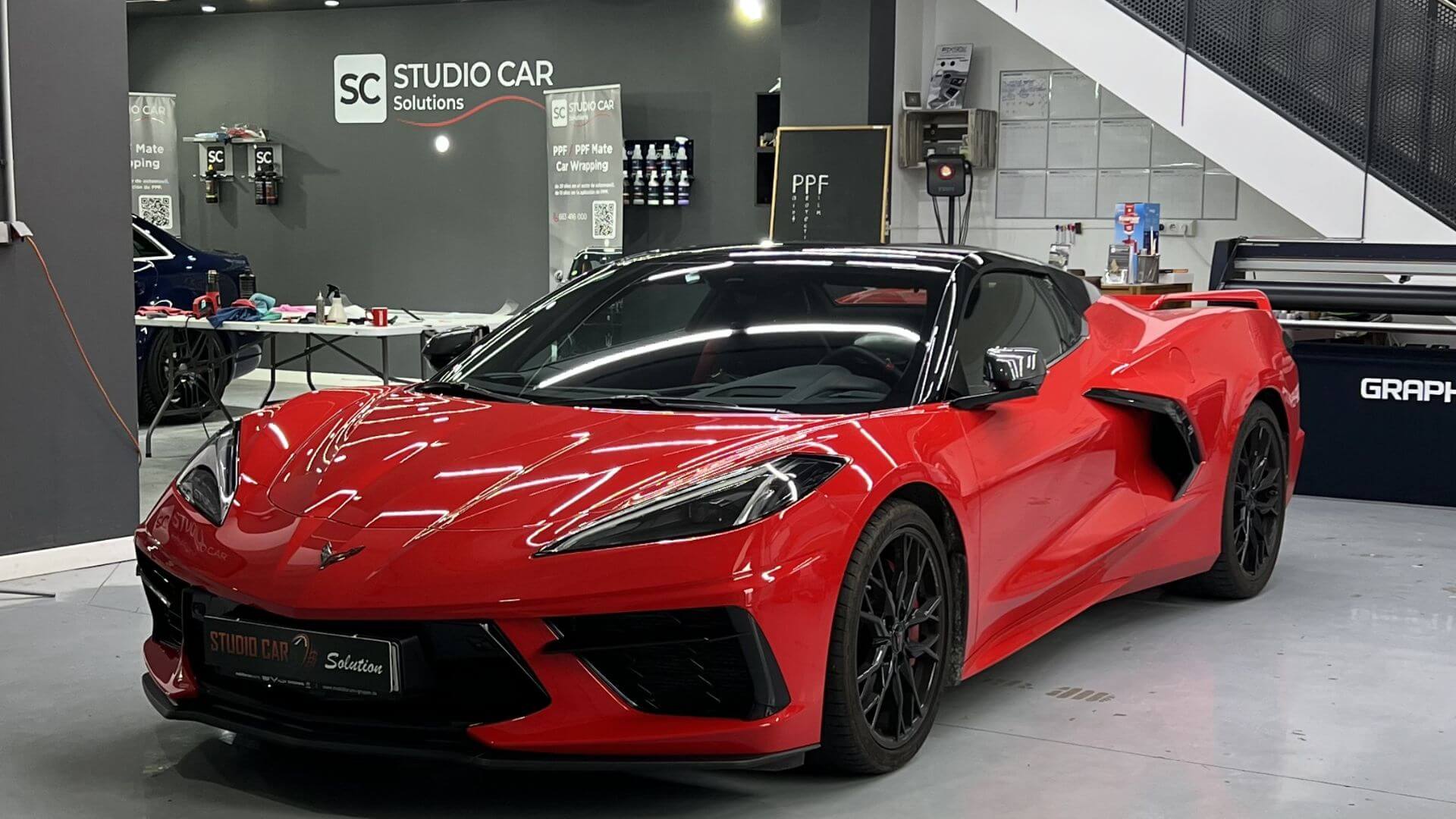
After a restoration, body repair, or complete refinish, there’s a question that frequently comes up among luxury and sports car owners: is it safe to install PPF immediately after painting the vehicle?
The concern is logical. After investing time and money in returning the car to a flawless finish, no one wants to risk affecting the result. However, you also don’t want to leave the new paint exposed to gravel, micro-impacts, contamination or scratches as the weeks go by.
For this reason, the search for a freshly painted car ppf has become one of the most frequent queries among those looking to protect a new paint without compromising its quality.
The short answer is yes, PPF can be installed over a new paint, but not immediately. There is a waiting time that must be respected to ensure that both the paint and the protective film are working properly.
When a car leaves the paint shop, the finish may appear completely finished. Visually it looks bright, uniform and ready to drive. However, on a technical level, the paint is still going through a curing process.
During this period, the solvents and compounds used in the application continue to evaporate and stabilize. Even though the surface already looks dry, the lower layers are still finishing settling.
Installing PPF too early can cause problems because the film creates a barrier over the paint. If the paint has not completed its curing process correctly, problems can occur that affect both the durability of the finish and the correct adhesion of the protective material.
For this reason, any serious paint protection specialist will recommend waiting before installation.
This is probably the most important question related to freshly painted car ppf.
While there is no single universal answer, as it depends on the type of paint, the products used, and the environmental conditions, most manufacturers and professionals recommend waiting between 30 and 90 days before installing PPF.
The reason for this margin is simple: it allows the paint to complete its curing process and achieve the stability necessary to receive the protective film.
Some factors that influence wait time include:
That’s why, before scheduling a PPF installation, it’s always advisable to consult with both the paint shop and the protection specialist.
One of the most common mistakes after a repainting is rushing to protect the car. Even if the intention is good, doing it ahead of time can lead to unintended consequences.
Common problems include:
These scenarios are rare when the right times are respected, but they represent a sufficient reason not to speed up the process.
When we talk about freshly painted ppf cars in high-end vehicles, caution is usually even greater.
Sports and luxury cars usually have special paints, multi-layer finishes or custom colors whose repair cost can be considerably higher than that of a conventional vehicle.
For this reason, the installation of PPF is often part of a protection strategy planned from the outset. First, the paint is guaranteed to reach its optimal state, and then the film is applied to preserve the result for years.
In this type of vehicle, patience is usually a smart investment.
It is not enough to count the days since the car left the workshop. A professional process always includes a prior assessment of the condition of the paintwork.
Before installing the PPF, it is important to check aspects such as:
This analysis makes it possible to determine whether the vehicle is truly ready to receive protection.
Absolutely.
In fact, many specialists consider that a new paint is one of the best times to install PPF, as long as the right times are respected.
Once curing is complete, PPF protects the investment made in restoration or repainting, helping to preserve the finish against impacts, scratches, environmental contamination and daily wear and tear.
Instead of waiting for the first damage to appear, protection becomes a preventive measure that helps to keep the car in exceptional condition for much longer.
The decision to install PPF over a freshly applied paint should not only focus on when, but also on how.
Choosing high-quality materials, respecting curing times and entrusting the process to experienced specialists are factors that directly influence the final result.
When everything is done correctly, PPF doesn’t just protect the paintwork, it helps preserve the aesthetics, value, and exclusivity of the vehicle.
In Studio Car, we understand that a refinish or restoration represents a significant investment. That’s why every project starts with a detailed assessment to determine the right time to install the protection and ensure a flawless result.
Our approach combines expertise, precision and premium materials to protect luxury and sports cars without compromising the quality of their finish.
If you are interested in topics related to PPF, detailing, paint protection and care of high-end vehicles, we invite you to continue exploring our blog, where we share guides, tips and answers to the most frequently asked questions by demanding owners.
Also follow us on Instagram and LinkedIn to discover real projects, industry news and specialized content on premium car protection.
Para brindar las mejores experiencias, utilizamos tecnologías como cookies para almacenar y/o acceder a información del dispositivo. Si acepta el uso de estas tecnologías, podremos procesar datos como el comportamiento de navegación o los identificadores únicos en este sitio. Si no acepta o retira el consentimiento, es posible que se vean afectadas ciertas características y funciones.