
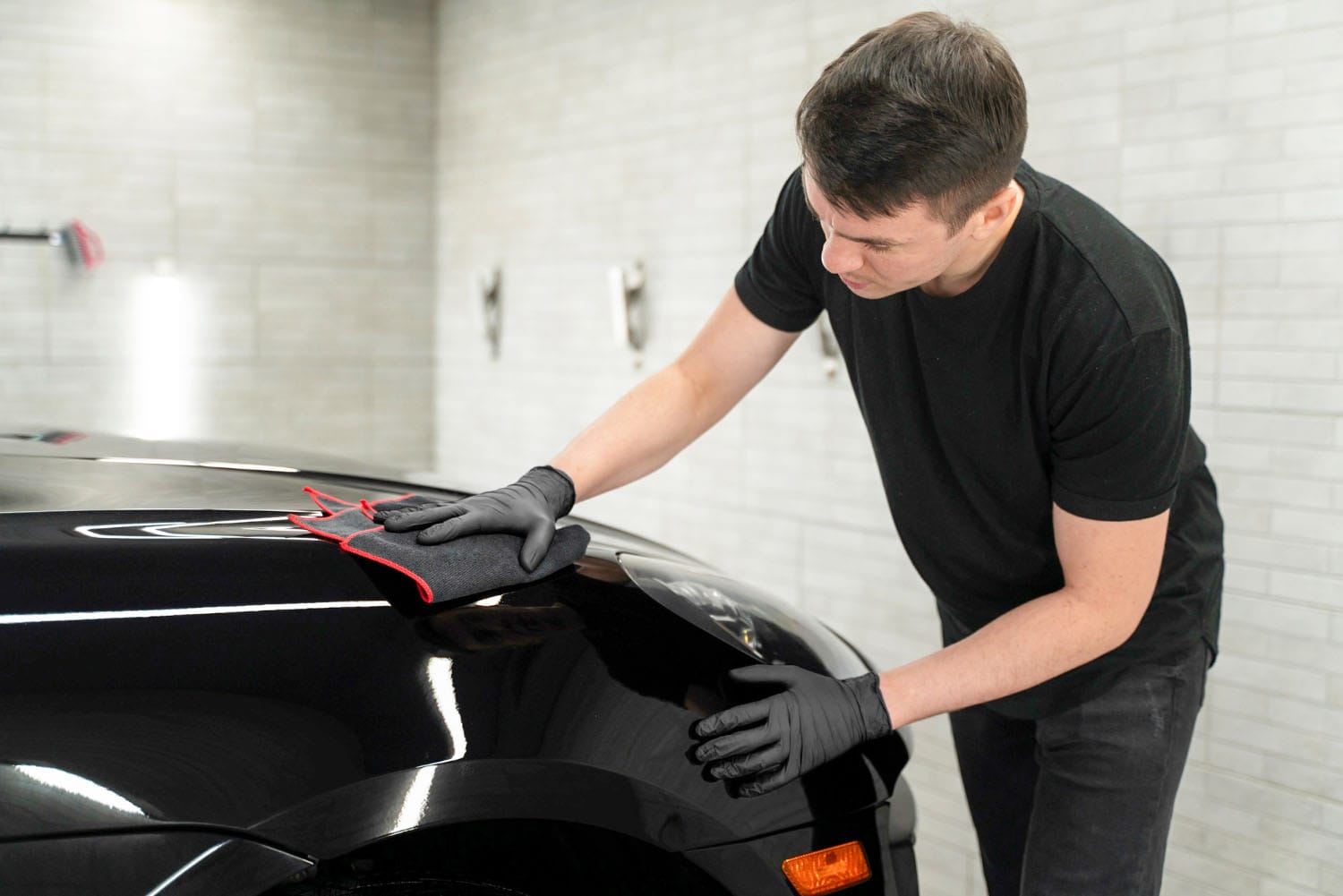
What is PPF and how this film protects car paint from scratches, impacts, dirt and daily wear and tear?
A car’s paint can stay spotless for years, but it’s also one of the parts most exposed to daily use. Road stones, small rubbing, insects, dirt, weather changes, or improper washes can end up leaving marks on the surface.
This is where an increasingly used solution to protect premium and sports vehicles appears: Paint Protection Film, commonly known as PPF.
But what is PPF exactly? It is a transparent film designed to protect certain surfaces of the vehicle against different external aggressions. One of its most interesting characteristics is its ability to self-repair against certain surface scratches when the material receives heat.
More than just a protective film, PPF has become a tool to preserve the original paint and maintain the aesthetics of the vehicle for longer.
PPF stands for Paint Protection Film, a protective film developed specifically for automotive surfaces. It is placed on top of the original paintwork creating a physical barrier between the vehicle’s finish and external agents.
Its main function is to absorb or reduce the impact of small aggressions that, if this protection did not exist, would reach the paint directly.
The material is made up of different layers that work together to offer transparency, flexibility, resistance and protection. Its installation requires precision to achieve proper visual integration with the bodywork.
Once properly installed, PPF can protect certain areas without significantly altering the original appearance of the vehicle.
One of the characteristics that generates the most interest when talking about what PPF is is its ability to self-repair.
Certain PPFs incorporate a top layer with self-healing properties that allows some surface marks to be reduced or visually eliminated when heat is applied. This can occur, for example, through exposure to the sun or through a controlled heat source during maintenance.
It is important to understand that this technology does not mean that the film is immune to any damage. Deep impacts, cuts, or aggressions that pass through layers of the material cannot be solved simply by self-repair.
Its advantage is especially related to small superficial marks that may appear during everyday use of the vehicle.
The usefulness of PPF is to act as a first barrier against different elements that can affect the paint.
Among its main applications are:
Protection will always depend on the type of film, the area installed and the specific characteristics of the product.
Not all vehicles necessarily need to be fully covered. Installation can be planned according to the most exposed areas and the owner’s needs.
The front is usually given special attention because it is directly exposed to stones, insects and debris projected while driving. Bonnet, bumpers, wings, mirrors and other front areas can be part of a localised protection strategy.
There are also areas that can benefit from protection due to frequent contact, such as certain interior parts of the doors or areas that are especially exposed to rubbing.
The choice depends on the vehicle, its use and the level of protection you want to achieve. In a sports car that is usually driven on the road, for example, the priorities may be different from those of a vehicle used mainly in the city.
One of the great advantages of PPF is that it allows the paint to be protected without changing its appearance.
A quality transparent film is designed to visually integrate with the surface of the vehicle. In this way, the color, lines and original design continue to take center stage while the film acts as a protective layer.
For premium and sports cars, this feature is particularly important. When a specific colour, exclusive finish or custom configuration has been chosen, retaining the original paint can be an essential part of vehicle care.
In addition, some PPFs are available with different finishes, which allows solutions adapted to different aesthetic needs to be proposed.
Know what PPF is and knowing its characteristics is only part of the process. The quality of the installation also has a direct influence on the final result.
Before placing the film, the surface must be properly prepared. Cleaning and decontamination allow you to work on a paint in suitable conditions and reduce the presence of particles that may affect the installation.
The film must then be carefully positioned and adapted to the bodywork. Precision in the cuts, edges, curves and different shapes of the vehicle is essential to achieve a clean finish.
In a sports or high-end car, where each line of the body has an aesthetic function, these details become even more important.
The value of PPF isn’t just in how the vehicle looks on the day of installation. Its true purpose is to help preserve that finish against later use.
The original paint is difficult to replace exactly once it has suffered certain damage. PPF creates an interlayer that can receive some of these aggressions and, when necessary, be replaced without having to intervene directly on the protected paint.
This makes the PPF a particularly interesting option for owners who want to preserve the original condition of their vehicle for longer.
In high-end vehicles, paint protection can be of particular importance. It’s not just about aesthetics: there’s also an interest in preserving the original materials and finishes in the best possible condition.
At Studio Car, PPF is part of a protection philosophy aimed at vehicles that require precision, care and specialized treatments. The choice of material, surface preparation and installation must respond to the specific characteristics of each car.
Understanding what PPF is allows you to better assess when it may be a suitable solution and what factors should be considered before installing it.
If you want to continue learning about protection, detailing and specialized care of premium vehicles, we invite you to continue exploring the Studio Car blog and follow us on Instagram and LinkedIn, where we share processes, projects and solutions to keep each vehicle in the best conditions.
Para brindar las mejores experiencias, utilizamos tecnologías como cookies para almacenar y/o acceder a información del dispositivo. Si acepta el uso de estas tecnologías, podremos procesar datos como el comportamiento de navegación o los identificadores únicos en este sitio. Si no acepta o retira el consentimiento, es posible que se vean afectadas ciertas características y funciones.